Kulturatlas
Kulturatlas is a platform for Bavaria's cultural sector, connecting people and organisations around communities, funding, events and shared know-how. I joined ahead of launch to help get it shipped, working within an existing design system rather than building one from scratch. My contributions centred on the notification system and global search, alongside smaller components such as expert badges and know-how cards.
- year
- 2026
- role
- design system contributor
- scope
- notifications, search, component work
- client
- kulturatlas
- tools
- figma
- status
- shipped
Grouping over volume
The conventional model for a notification system is one entry per event: each comment, mention or request becomes its own line. On a platform built around active discussion, that model degrades quickly. A single busy thread can produce a dozen notifications in an afternoon, and the entries that matter — a contact request, a flagged comment — are pushed down by volume until the feed becomes something people learn to ignore rather than read.
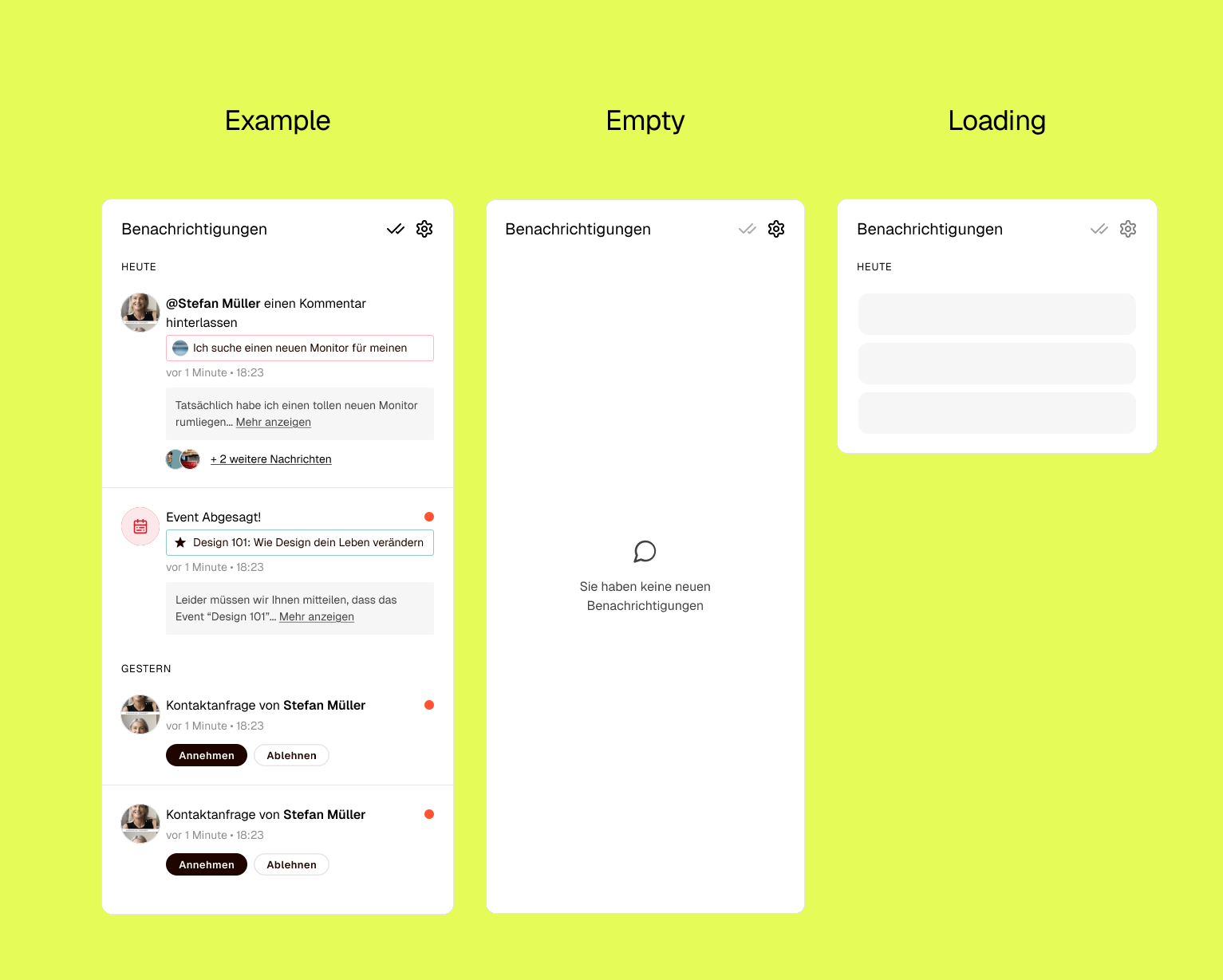
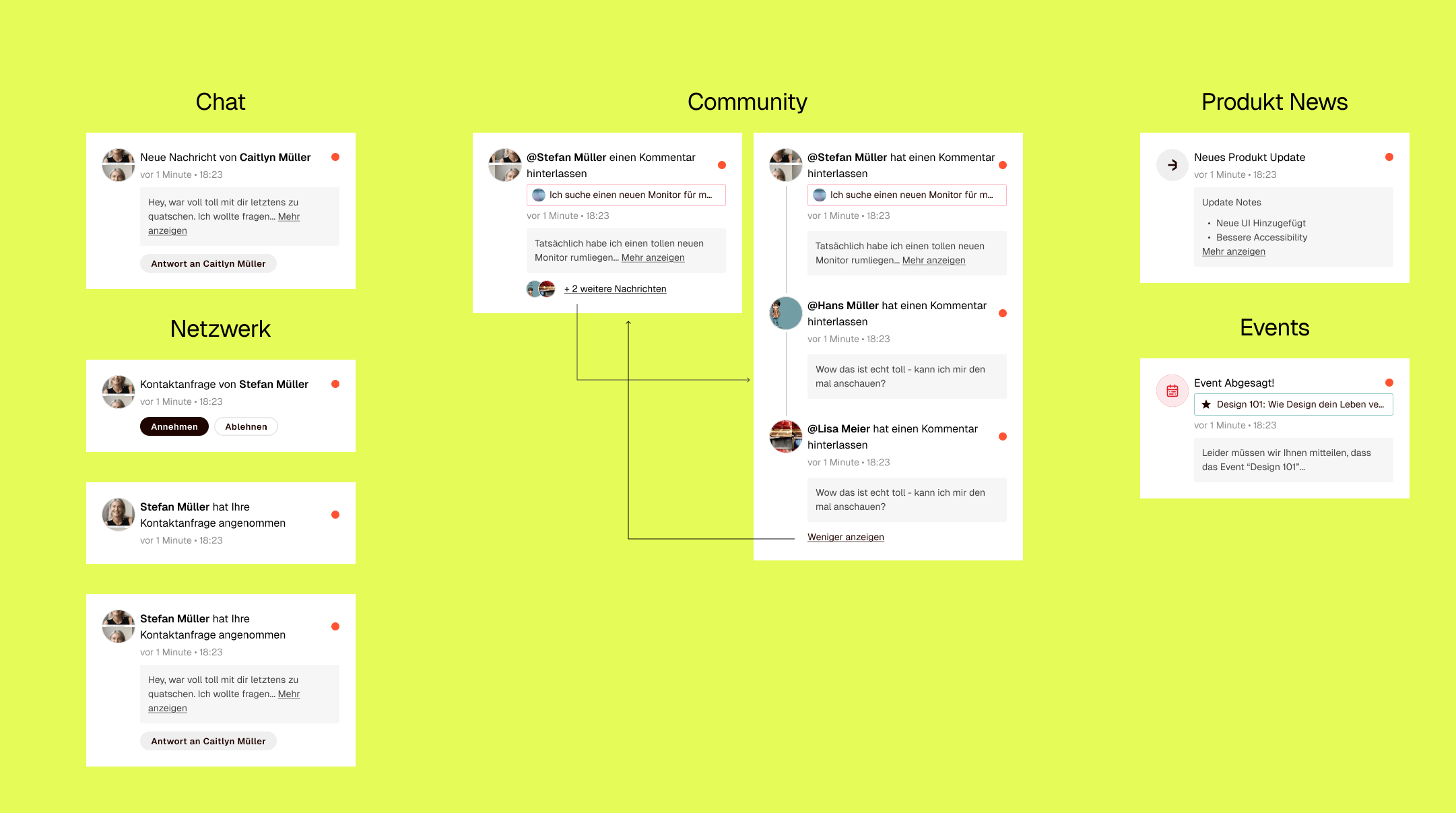
I grouped related activity instead. Multiple comments on the same post collapse into a single card, expandable in place — a grouping model drawn from how tools like Atlassian handle the same problem — so one thread occupies one entry regardless of how much happened inside it. The same logic governs how each type is presented: a comment carries the commenter and the message, a contact request carries its accept and decline actions inline, a cancelled event carries a status marker rather than a sentence. I also defined the states each type has to survive — populated, empty and loading — so the system holds together before any real data arrives. What the work turned on was keeping the feed legible under load, rather than technically complete and practically unread.
Categorising the search
The brief was a single line — the platform should have a global search — with no specification of how it should behave. That silence is the design problem. Kulturatlas indexes genuinely heterogeneous content: people, communities, know-how documents, events, funding opportunities and individual posts. Returned as one ranked list, these collapse into each other; a person, a funding call and a forum post compete for the same rows, and whatever the matching favours buries the rest.
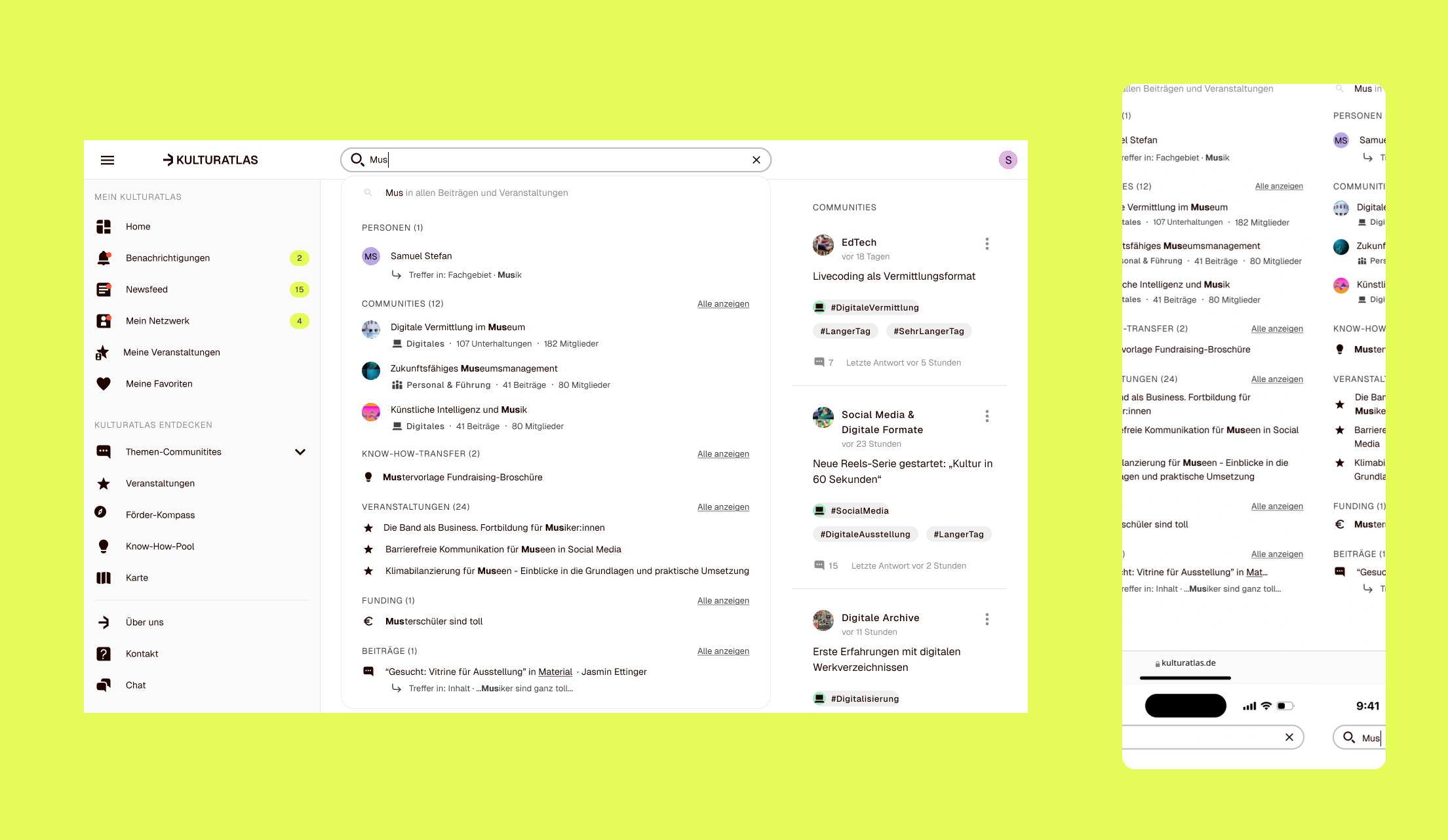
I structured the results by type instead. Each category is its own labelled group, carrying a count, so the shape of the result set is visible before anything is opened. Where a match is not self-evident, the result shows its reason: a person surfaced by their field of expertise displays the field that matched, a post displays the passage the query hit. In a search spanning this many content types, that reasoning is what separates a result a person can act on from one they have to decode.
Unifying the cards
Kulturatlas presents almost everything as a card — communities, events, articles, funding calls — and each type had grown its own. The differences were not deliberate: dates were formatted one way on an event and another on a funding entry, metadata appeared as plain text in one card and as icon rows in the next, and actions ranged from a single link to an exposed toolbar of icons. Read on its own, each card was fine. Read together, on a feed or in a set of search results, they did not look like one product.
I aligned them onto a shared structure: a common metadata pattern of icon-and-label rows for date, price, location and organiser, a consistent treatment of title, description and tags, and a single rule for actions — one primary action where it exists, everything else collapsed into an overflow menu rather than shown at once. Each type still leads with what matters to it, an event with its date, a funding call with its amount, but the scaffolding underneath is identical. On a platform whose content is constantly seen side by side, the card is where consistency is either held or lost.
Other contributions
Alongside these, the work included smaller additions to the system as it moved toward launch: an expert badge, know-how cards, community tiles, and the incremental design-system corrections that accumulate when a product is being readied to ship.
Result
The platform shipped with both systems in place. Joining an existing design system close to launch is its own constraint: the work is to read the established patterns accurately and extend them without seams, rather than to design from a blank canvas. On a product being handed between designers, that is what keeps the result reading as one coherent system.